The Rule of Three
Everything is easier to do if you break it down into steps. I’m a fan of three steps. It feels less overwhelming than 10 steps, even if there are secretly some mini-steps within the three. Plus, it’s a handy framework you can go to again and again.
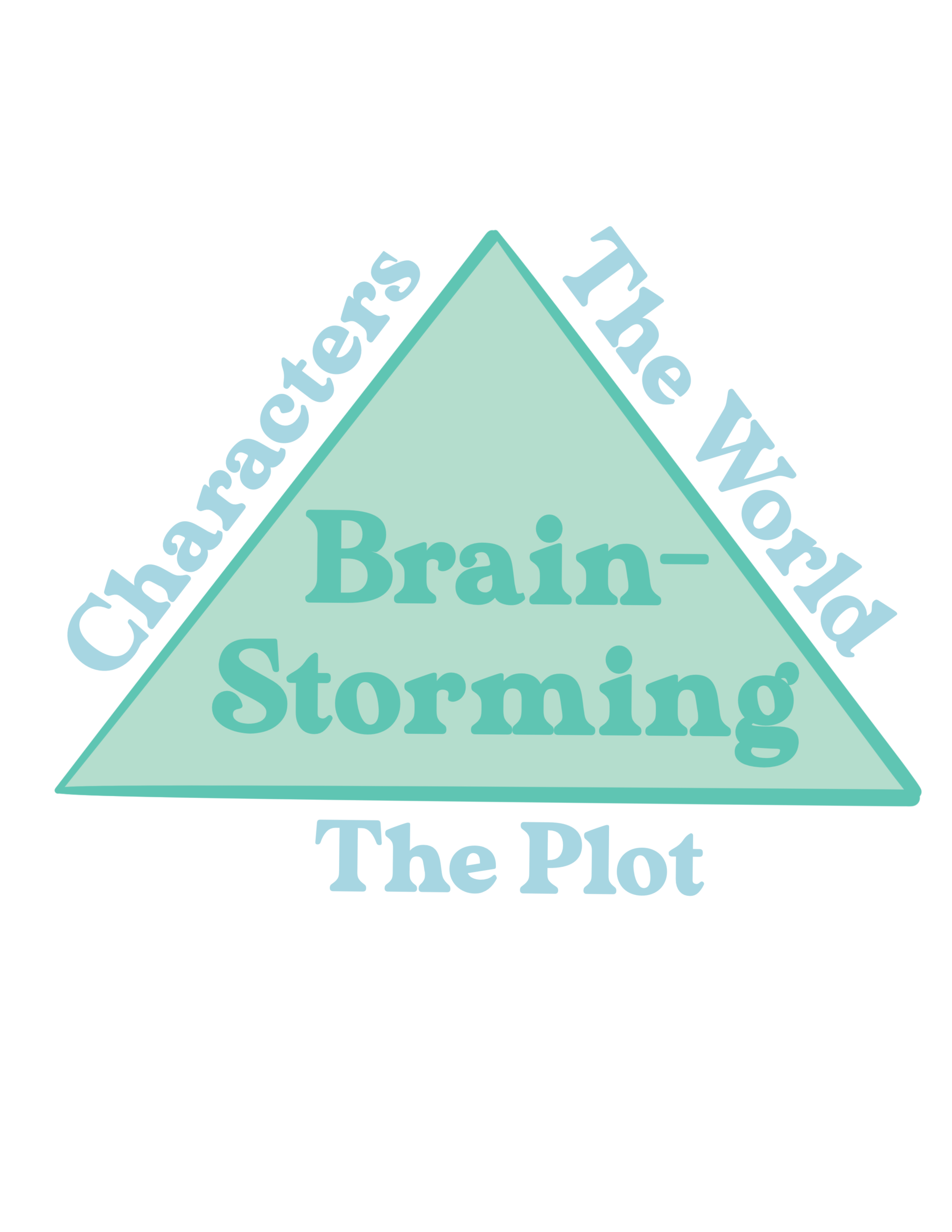
For example, when brainstorming a new story idea, you focus on three things: the characters, the world, and the plot.
For writing, you rotate through three main types of sentences: dialogue, description, and emotion.
For editing, you break things down into: the first draft (getting words onto the page), the second draft (fixing plot holes and incorporating suggestions from beta readers), and the third draft (proofreading and checking grammar).
Like the mighty triangle or breakfast, lunch, and dinner, the rule of three is a helpful framework.
You can practice using the rule of three framework with the following brainstorming prompts.
Brainstorming Rule of Three Prompts
The World (Three Things to Think About):
How is the world hard? What are some things in the world that are challenges for your main character?
What’s different in this world? What are a few things about the world of your book that the reader needs to know to understand your story? (Examples: how they get around (car, bike, magical frog), how they pay for things, who is in charge)
What is the weather like? Are there seasons? Does the weather pose challenges for your characters?
The Characters (Three Things to Think About):
Who is the main character? How old are they? What do they want the most (ex. win a competition, save their family business, prove their enemy wrong)? What are they afraid of?
Who are the friends? Even if they start the book with no friends, the main character should have people that help along the way. They can be enemies turned friends, friends turned enemies, talking pets. Use your imagination, but it is easier to write if your main character has someone to talk to!
Who is the enemy? This doesn’t have to be a big, bad enemy or even a real person. It can be a memory of a big mistake they made in the past or a fear of something bad happening. For your reader to turn pages, you want your main character to be battling something. The reader should wonder if the main character will succeed or fail.
The Plot (Three Things to Think About):
What does our main character want? Use the first part of the book to introduce your character and the world. Show examples of the main character being brave or helping someone. What is special about the main character? Why should we root for the main character?
Why did the reader pick the book up? The second act or the middle of your book should give the reader what they want. For example, if your book is an adventure story, the middle is where you show brave and wild adventures. If your book is a mystery, the middle is where the characters solve puzzles and clues. If your book is funny, the middle is where silly things happen. One way to do this is to think of a scene and ask: how can I make this even bigger? If they are solving a puzzle, can you add a deadline (ex. the floor will disappear and they will fall into lava if the puzzle is not solved, the room will fill with water if the code is not cracked in an hour)?
The final battle. Even if your book is not a fantasy-style book, you should have the main characters face their enemy. What is the plan to win? How does that fail? How do they regroup and come up with a better plan? Can you use something from earlier in the story to help win the battle (ex. a trick or a riddle someone taught them that seemed unimportant at the time, something the enemy said or did that they can use in the battle, or the help of an unexpected ally)?